
There’s no denying that most economic forecasts for 2026 look incredibly bleak.
Shifting and fraying global alliances with the knock-on effects on supply chains, currency exchanges and access to labour.
Schizophrenic (you choose another term) see-sawing behaviours that undermine the most basic requirement of any business environment – consistency.
Consumer confidence and exuberance – good for markets – replaced by a growing fatigue and anxiety around job security, income inequality and a tsunami of change called AI barreling towards our organizations and employees.
And yet we must act.
That phrase is quickly becoming one of my favourites. Joining “if you don’t like change, you’re going to like irrelevance even less” and “Hope is not a Strategy”
The admonishment that “Hope is not a Strategy” was covered in a post I wrote in 2018 and I still stand by that opinion. FTR I believe Strategy legends Richard Rumelt and Roger Martin would agree enthusiastically.
So, against such a turbulent and uncertain set of market conditions, what is any leader – business or political – to do?
It would be comforting to say “go back to bed and pull the duvet cover up” – and, as the snow billows outside and the temperature is -20 in Toronto today that’s a very legitimate option.
And yet we must act.
Firstly, strategy is a leadership mindset as much as it is an exercise in diligence and discipline.
Strategy borne out of desperation or fear is unlikely to lead to capturing consumer attention, deepening your relationships with suppliers or signalling to the market that your value proposition is, in fact, valuable.
For my money, the mindset that leaders desperately do need to convey is one of optimism.
Perhaps I’m dancing on a semantic pinhead, but I strongly believe that optimism is a more powerful motivator for any organizational culture and the (dwindling) morale of our people than hope.
Optimism is something you control. Hope is something you wish upon.
Optimism is future-forward. Hope feels like languishing.
Optimism is a catalytic emotion. Hope feels like fantasy.
Okay Hilton I’ll buy into your optimism argument but what’s a practical and pragmatic approach I can bring to my ELT on January 3rd when we’re back in the office?
Strategic foresight and scenario planning
The disciplined and critical methodology that builds plausible futures for your organization (or country as Finland has done!!) and ensures you’re better prepared for them.
This isn’t crystal-ball, carnival tent predictions – this is defining what are credible, plausible and even likely futures our business may face…and ensuring you have a plan for it.
Tariffs? We anticipated that and we have a plan for that, even as they see-saw weekly.
Demographic upheavals? We’ve been watching that “Grey Rhino” and have optionality built into our plans for that.
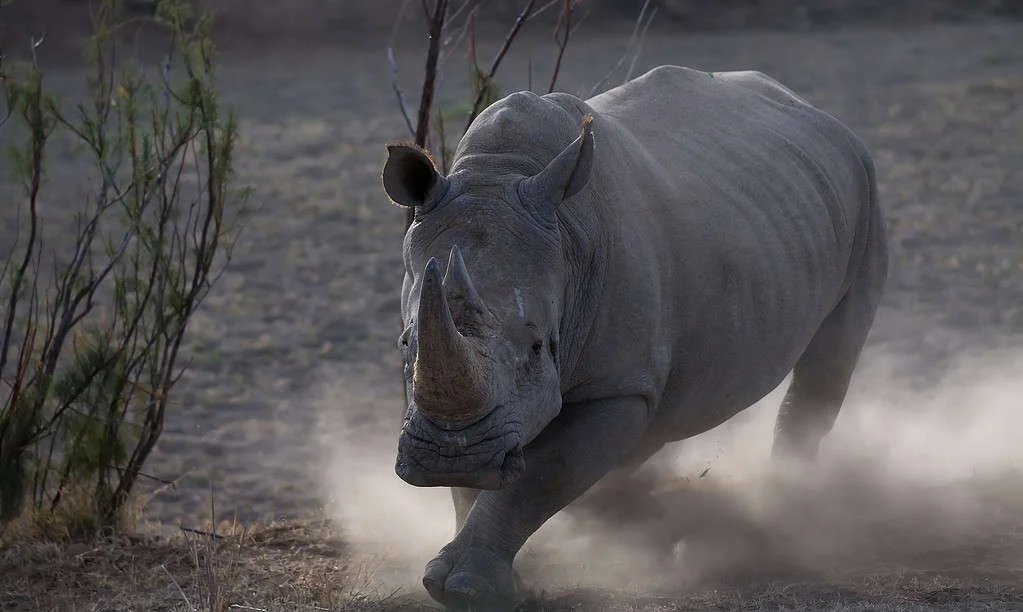
“Grey Rhinos” - like their cousins “Black Swans” - are a term to describe slow, lumbering scenarios that we see coming towards us…and yet we choose to wait before tackling them. Reminds me of a certain unsinkable ship and a large block of frozen ice.
Regional bifurcation? We’ve been tracking the “weak” and (very very) loud signals that show globalization is becoming regional and consolidating into a North American, a European and an Asian sphere. We’re prepared for that. We’re also delighted to add “bifurcation” to our Strategy deck.
Over the past year I’ve had the good fortune to interview some of the pre-eminent scenario planners and strategic foresight leaders globally. Yip that’s a flex. But, and I can’t stress this enough – in every interview, the recurring sentiment was one of optimism.
Why?
Because scenario planning gives you the opportunity to define more positive narratives that you can then pro-actively build and allocate energy and resources toward.
Because strategic foresight prepares you for the uncertainty and the tumult, so you’re not caught flat-footed and ill-prepared. And you’re not forced to layoff staff because “we didn’t see that coming”
Because scenario planning gives you some ownership of the future rather than being an unwilling recipient of it.
So, if you’re pondering over Baileys and coffee how to build new organizational muscle and a new leadership posture for 2026, I strenuously hope (pun intended) you’ll consider scenario planning or strategic foresight as part of your toolkit.
Being prepared for the future will, I promise, make you and your organization more optimistic for it.
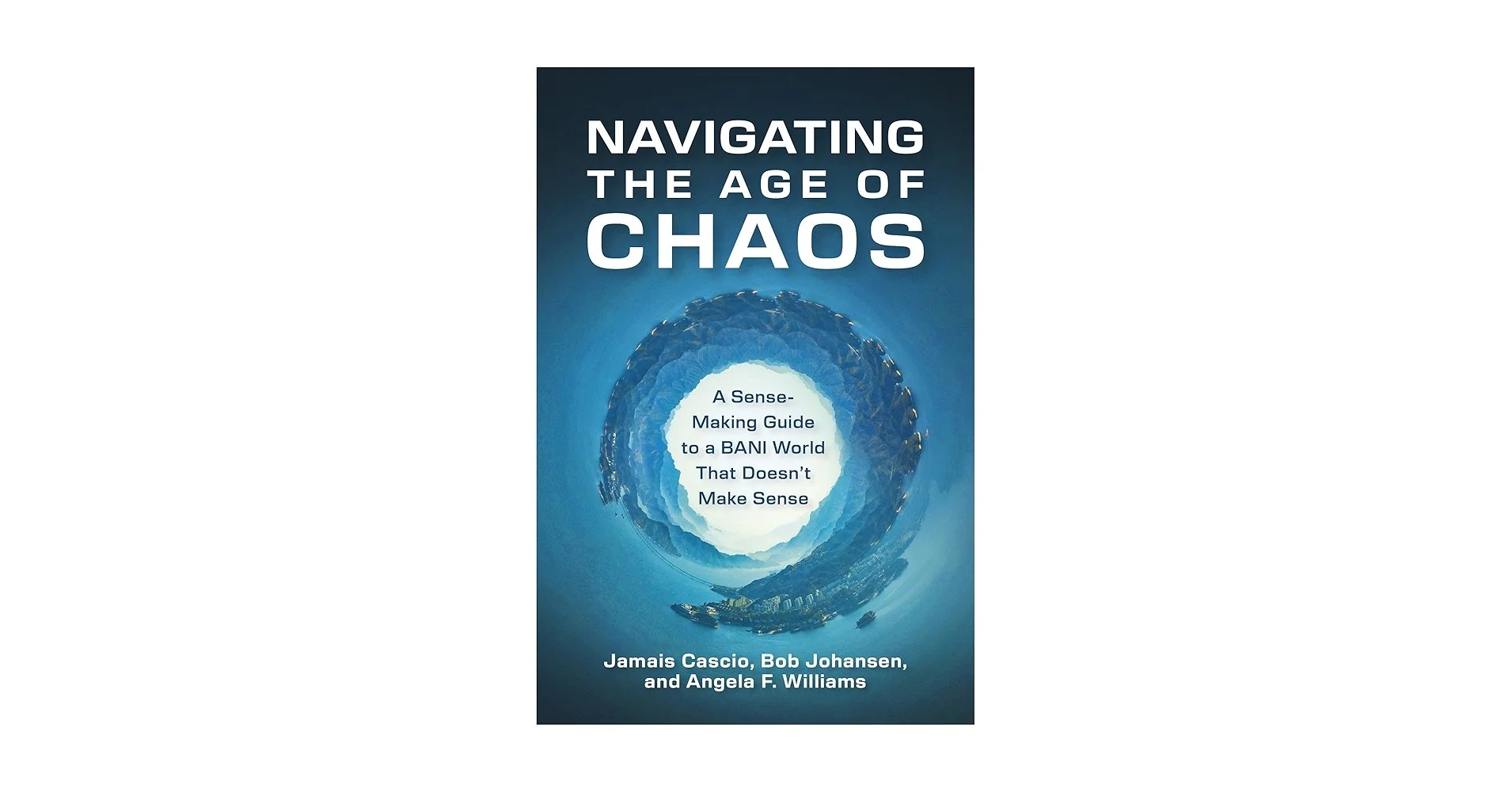
This was one of my favourite reads of 2026. I strongly encourage you to pick up a copy.
FURTHER READING
Here are the links to my series of scenario planning and strategic foresight interviews. My profound thanks to each of these amazing people who gave so generously of their time and experience.
Jeremy Bentham, the legendary lead at Shell Scenarios
Alexandra Whittington - Weak Signals & Scenario Planning
Robin Champ - Why Scenarios are critical for Strategy
Ben Moncrieffe - Make Foresight useful, not just interesting
Pippa Goodman - Activating Foresight in Your Organization
Craig Wing - The Four Seasons To Forecast For